

What if the most sophisticated tool for reversing skin ageing wasn’t a synthetic chemical, but a concentrated resource already flowing through your veins? Many of our clients in the Newcastle and Toronto areas feel a sense of frustration when dealing with dull skin or acne scars that refuse to fade, often feeling overwhelmed by the hype surrounding various “vampire” procedures. It’s perfectly natural to want clarity before committing your time and skin health to a clinical treatment.
When weighing up PRP vs microneedling, the decision typically rests on whether you want to initiate a standard repair response or provide the concentrated biological resources to supercharge that healing process. We agree that achieving a firmer, clearer complexion requires more than just a trendy device; it requires an evidence-based strategy tailored to your unique biology. This article will guide you through the clinical differences between these regenerative therapies, explaining how growth factors work and why a professional, nurse-led approach ensures both your safety and a truly natural result.
Key Takeaways
- Understand the clinical distinction between the mechanical stimulus of skin needling and the biological growth factors provided by Platelet-Rich Plasma.
- Evaluate PRP vs microneedling to determine whether your skin requires surface-level resurfacing or a deeper, natural biostimulator for repair.
- Identify the most effective approach for your specific concerns, such as using microneedling for textured acne scars or PRP for delicate under-eye rejuvenation.
- Gain realistic expectations regarding treatment timelines, including the clinical duration of your session and the typical recovery period.
- Learn why a nurse-led consultation is vital for ensuring the safety, integrity, and natural-looking results of these advanced regenerative treatments.
Understanding the Basics: What are PRP and Microneedling?
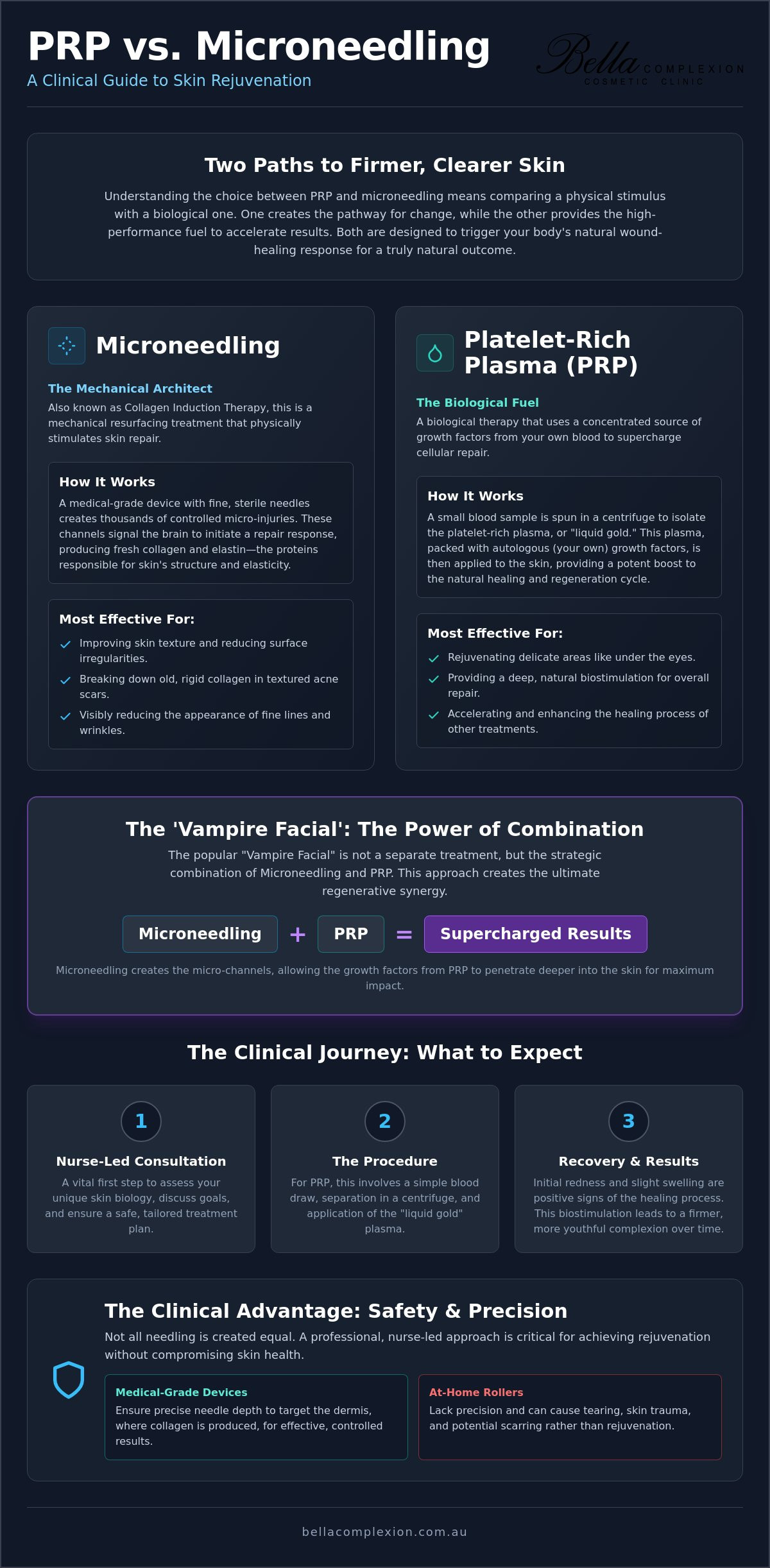
Choosing between advanced skin treatments often begins with a bit of terminology. If you’ve spent any time researching skin rejuvenation in Australian clinics, you’ve likely encountered the term “Vampire Facial.” This is simply the popular name for a procedure that combines skin needling with Platelet-Rich Plasma (PRP). While the name sounds dramatic, the science is grounded in the body’s own regenerative abilities. The fundamental goal of both therapies is to trigger a natural wound-healing response, encouraging the skin to produce new, healthy tissue without the need for synthetic additives.
When we look at PRP vs microneedling, we’re essentially comparing a physical stimulus with a biological one. Microneedling acts as the mechanical “engine” that creates a pathway for change, while PRP serves as the high-performance “fuel” that accelerates the results. Both treatments are highly effective on their own, but they operate through different pathways to achieve the same outcome: firmer, smoother, and more resilient skin.
What is Medical-Grade Skin Needling?
Skin needling, also known as Collagen induction therapy, is a mechanical resurfacing treatment. We use a medical-grade device equipped with very fine, sterile needles to create controlled micro-injuries in the skin’s surface. These tiny channels are invisible to the naked eye, but they’re enough to signal the brain that the area needs repair. This signals the production of fresh collagen and elastin, the two proteins responsible for skin’s structural integrity.
It’s vital to distinguish medical-grade needling from the at-home rollers you might find online. Professional devices allow for precise control over needle depth, ensuring we reach the dermis where real change happens. At-home rollers often lack this precision and can cause unnecessary trauma or “tearing” of the skin, which leads to scarring rather than rejuvenation. In a clinical setting, we prioritise safety and sterile environments to ensure every micro-channel serves a purpose. For a comprehensive overview of how this procedure works and what to expect from a nurse-led session, our skin needling Toronto NSW clinical guide to microneedling rejuvenation covers the science and process in detail.
The Science Behind Platelet-Rich Plasma (PRP)
PRP is a biological therapy that utilises the healing power found within your own blood. The process begins with a simple blood draw, similar to a routine test. We then place the blood in a centrifuge, a machine that spins at high speeds to separate the red blood cells from the plasma. This isolated plasma contains a much higher concentration of platelets than what’s normally found in your circulation. These platelets are packed with growth factors that act as chemical messengers, telling your cells to regenerate and heal.
PRP is a concentrated source of autologous growth factors. Because the material is “autologous” (meaning it comes from your own body), the risk of an allergic reaction or rejection is virtually non-existent. We often refer to this plasma as “liquid gold” because of its rich, amber colour and its immense value in skin repair. When applied to the skin or injected, it provides a potent boost to the healing cycle initiated by needling, making it a cornerstone of modern regenerative medicine. The same concentrated growth factors that revitalise skin are also highly effective for PRP hair treatment Toronto NSW residents seek to stimulate dormant follicles and restore visible hair density.
The Science of Repair: How These Treatments Stimulate Collagen
To understand the results of PRP vs microneedling, we have to look at how the skin heals itself. Rejuvenation isn’t an overnight event; it’s a physiological process triggered by a controlled inflammatory phase. When we perform these treatments, we’re essentially “waking up” the skin’s repair mechanisms. This initial redness and slight swelling are not side effects to be avoided, but rather signs that the body is dispatching essential cells to build new tissue. This biostimulation is what eventually leads to a firmer, more youthful complexion.
The distinction lies in the type of stimulus provided. Standard microneedling relies on a physical trigger, while PRP introduces a biological one. According to Yale Medicine on microneedling, the procedure is particularly effective because it bypasses the outer barrier to reach the deeper layers where collagen production occurs. By understanding this science, you can better appreciate why these treatments are often paired together to maximise the skin’s regenerative potential.
Microneedling: The Physical Architecture
Microneedling acts as a mechanical architect for the skin. By creating thousands of vertical micro-channels, it physically breaks down old, rigid strands of collagen that often characterise scar tissue or deep wrinkles. This process is highly effective for pore refinement and smoothing out surface-level imperfections. These channels also serve a secondary purpose: they provide a direct pathway for active ingredients to penetrate deeper than they ever could through an intact skin barrier, making the “physical” aspect of the treatment incredibly versatile.
PRP: The Biological Fuel
While needling builds the structure, PRP provides the biological fuel to accelerate that construction. The growth factors within your plasma act as chemical messengers, signalling your fibroblasts to produce fresh collagen and elastin. This biological “boost” is what leads to that characteristic “glow” and improved skin tone. Because we’re using your own biological material, there’s no risk of allergy, making it an safe, natural alternative to synthetic fillers for those seeking a more holistic approach to anti-ageing.
Protecting the skin barrier during this window of repair is paramount. We often recommend medical-grade recovery protocols, such as those from Synergie Skin, to soothe the inflammatory response while locking in moisture. Ensuring your skin has the right support during the first 48 hours can significantly enhance your final results. If you’re unsure which pathway is right for your unique concerns, our team at Bella Complexion can help you design a bespoke treatment plan during a clinical consultation.
PRP vs Microneedling: A Side-by-Side Comparison
When deciding on PRP vs microneedling, the practicalities of the appointment are just as important as the biological outcomes. A standard skin needling session is relatively efficient, usually taking about 45 to 60 minutes. However, when we incorporate Platelet-Rich Plasma, we need to allow extra time for the clinical blood draw and the centrifugation process. This typically adds about 20 to 30 minutes to your visit. To ensure your comfort, we apply a high-strength topical anaesthetic before beginning either procedure, which minimises sensation and ensures a relaxed, professional experience.
Most patients require a series of three to six treatments, spaced four to six weeks apart, to see the full structural benefits. While you might notice a refreshed “glow” shortly after your first PRP session, the true collagen synthesis happens over several months. This steady, methodical approach mirrors our clinic’s philosophy of long-term wellness rather than quick, temporary fixes. By committing to a structured plan, you allow your skin the time it needs to remodel and strengthen from within.
Downtime and Recovery Expectations
Most clients experience a sensation similar to a mild sunburn for 24 to 48 hours following standard needling. Interestingly, while adding PRP involves an extra clinical step, it often shortens this recovery window. The American Academy of Dermatology on PRP notes that these concentrated platelets can significantly support the skin’s natural healing ability. In our Toronto clinic, we find that PRP patients often see their redness subside faster than those having needling alone.
Regardless of your choice, strict sun avoidance is essential during the initial healing phase. The Australian sun is particularly harsh on newly treated skin, so a physical SPF and staying out of direct light for the first few days is non-negotiable. We also advise pausing any harsh active ingredients, such as retinols or acids, to let the skin barrier repair itself without unnecessary irritation.
Investment and Long-Term Value
There is a distinct difference in the initial investment between these two modalities. PRP requires specialised medical equipment and sterile, single-use kits to process your plasma safely. While standard needling is an excellent entry-level treatment for texture, PRP offers a deeper level of biostimulation that often results in more profound, long-lasting improvements in skin quality. This makes it a popular “natural” alternative for those who prefer to avoid synthetic fillers.
Choosing a nurse-led environment in the Newcastle area ensures that your blood is handled with the highest clinical standards and integrity. While budget salons might offer lower rates, they often lack the medical-grade centrifuges required to reach the therapeutic platelet concentrations necessary for real change. Investing in professional expertise means you are prioritising both the safety of your procedure and the longevity of your aesthetic results. Understanding why clinical experience matters so deeply is explored further in our guide to choosing a cosmetic nurse Newcastle residents can trust for safe, evidence-based care.
Identifying Your Concerns: Which Therapy Suits Your Skin Goals?
Choosing between advanced treatments is rarely a matter of finding one superior method; it’s about matching the clinical pathway to your specific aesthetic concerns. While our previous comparisons touched on the science, applying that knowledge to your own face is where a professional consultation becomes invaluable. Whether you’re battling the remnants of teenage acne or noticing a loss of vitality around the eyes, the distinction between PRP vs microneedling becomes much clearer once we define your primary skin health goals.
It’s also worth considering that your skin may require different approaches for different zones. A one size fits all approach often leads to underwhelming results, especially when dealing with complex issues like deep scarring or hormonal skin changes. By isolating your main concerns, we can determine if a physical stimulus, a biological boost, or a combination of both will yield the most natural and lasting outcome for your complexion.
Best for Texture and Scarring
For those dealing with deep, tethered acne scars or significant texture issues, medical-grade skin needling is often the heavy lifter. The mechanical action of the needles is necessary to break up the fibrous bands of scar tissue that pull the skin down and create pits. While PRP provides an excellent healing boost, it cannot physically break those scars in the way a needle can. If your goal is a smoother surface, focusing on skin resurfacing in Warners Bay allows us to use deeper needle depths safely, providing the structural change required for lasting results. For a broader overview of how needling compares to newer regenerative options, our guide to acne scar treatment in Lake Macquarie explores how exosomes and Rejuran can further enhance the repair process beyond what needling alone can achieve.
Best for Under-Eye Hollows and Dark Circles
Conversely, the delicate skin under the eyes is often too thin for aggressive mechanical needling alone. This is where Platelet-Rich Plasma truly shines. PRP is a superior choice for dark circles and hollowness because it encourages the skin to thicken and improves the micro-circulation in the area. It offers a natural alternative to synthetic dermal fillers, which can sometimes look heavy or unnatural in the tear trough. If you are struggling with tired eyes, our PRP under-eye treatment in Lake Macquarie provides a clinical pathway to restore volume using your own biological material.
For general anti-ageing, we often recommend a combination of both. Needling addresses the fine lines and surface pigmentation, while the PRP growth factors provide the internal plumpness that characterises healthy, youthful skin. We also utilise PRP for scalp rejuvenation, as the growth factors can stimulate dormant hair follicles in a way that standard needling cannot achieve alone; our dedicated guide to platelet-rich plasma for hair restoration explains exactly how this biological process works to improve visible hair thickness. This versatility makes it one of the most powerful tools in our regenerative kit. If you’re ready to move beyond the confusion and start a targeted rejuvenation journey, book a consultation with our clinical team today to discuss your options.
The Clinical Advantage: Professional Skin Rejuvenation at Bella Complexion
The success of any regenerative therapy depends as much on the practitioner as it does on the technology. When you’re navigating the choice between PRP vs microneedling, the clinical environment where your treatment takes place is a critical factor in your final results. At Bella Complexion, we believe that medical-grade outcomes require medical-grade standards. Sue Willis, our founder and a Registered Nurse with over 30 years of experience, brings a level of clinical rigour to every procedure that ensures your safety remains the highest priority. This nurse-led approach allows us to move beyond the superficial and offer a bespoke strategy that respects your skin’s unique physiology.
Every face we treat in our Toronto clinic presents a different set of challenges and opportunities. We don’t believe in a “one size fits all” methodology; instead, we meticulously tailor the needle depth and the concentration of your Platelet-Rich Plasma to match your specific skin thickness and repair needs. This level of individualised care is what separates a standard beauty treatment from a professional medical-aesthetic intervention. It ensures that we are not just performing a procedure, but actively managing your skin’s journey toward long-term health and vitality.
Why a Nurse-Led Clinic Matters
PRP involves the handling and processing of your blood, a task that demands absolute sterile integrity and medical expertise. In our Toronto clinic, we follow strict hospital-grade hygiene protocols for every blood draw and centrifugation step. This clinical background also means we’re uniquely qualified to assess your medical history and identify any contraindications that might affect your healing process. For those also interested in other aesthetic enhancements, our expertise extends to Cosmetic Injectables in Toronto, allowing us to provide a holistic, safe, and balanced rejuvenation plan that focuses on natural-looking results.
Combining Modalities for Maximum Impact
While we’ve explored PRP vs microneedling as separate entities, the “Gold Standard” in modern aesthetics often involves their synergy. By combining the mechanical stimulation of skin needling with the biological boost of your own growth factors, we can accelerate the repair process and achieve more profound results than either treatment could provide alone. Depending on your specific needs, we might also discuss integrating other advanced biostimulators like Rejuran or Exosomes to further refine your outcome.
Your journey to healthier, firmer skin starts with an honest, educational conversation. We invite you to visit our boutique clinic in Toronto to discuss your goals and undergo a thorough skin assessment. By choosing a professional, nurse-led environment, you’re ensuring that your regenerative therapy is performed with the highest level of integrity and care. Contact us today to book your initial consultation and discover which clinical pathway is right for you.
Your Journey Toward Natural Skin Health
Choosing the right regenerative therapy is a significant step toward achieving your long-term skin health goals. Whether you opt for the physical resurfacing power of skin needling or the concentrated biological repair of Platelet-Rich Plasma, the most important factor is a strategy tailored to your unique anatomy. Deciding between PRP vs microneedling doesn’t have to be confusing when you have the right clinical guidance to explain how these biostimulators interact with your body’s natural healing cycle. By matching the treatment to your specific concerns, such as under-eye thinning or acne scarring, you ensure a result that feels both effective and entirely natural.
At Bella Complexion, we prioritise your safety and aesthetic results through a nurse-led approach that values integrity over quick fixes. Sue Willis is a Registered Nurse with over 30 years of clinical experience, providing expert care to our community across Toronto, Lake Macquarie, and Newcastle. We invite you to book your clinical skin consultation with Sue Willis today to discuss your unique skin profile and design a bespoke treatment plan. We look forward to supporting you as you restore your skin’s vitality and confidence.
Frequently Asked Questions
Is PRP better than microneedling for acne scars?
Microneedling is generally the primary tool for the physical breakdown of acne scar tissue, while PRP acts as a biological accelerant for the healing process. The mechanical action of the needles is necessary to disrupt the fibrous bands of tethered scars. When we evaluate PRP vs microneedling for scarring, we often find that a combination provides the most comprehensive result; the needles address the surface texture, while the plasma growth factors support the skin’s deeper structural remodelling. Patients seeking a full comparison of regenerative options may also benefit from reading our dedicated guide to acne scar treatment in Lake Macquarie comparing exosomes, needling, and regenerative therapies.
How many sessions of PRP vs microneedling will I need?
Most patients require a series of three to six sessions to achieve optimal results, regardless of whether they choose standard needling or the addition of plasma. These appointments are typically spaced four to six weeks apart to align with your skin’s natural cellular turnover. During your clinical consultation in Toronto, we will assess your specific skin health goals and design a timeline that ensures lasting, structural improvements rather than a temporary fix.
Does PRP microneedling hurt more than standard needling?
The sensation of the needling itself is identical for both treatments, as we apply a high-strength topical anaesthetic to ensure your comfort. The only additional step for a PRP treatment is a routine blood draw, which feels like a quick pinprick. Most of our clients find the procedure very tolerable, describing the sensation as a light vibration or mild prickling rather than pain.
Can I go back to work immediately after a PRP treatment?
You can return to work immediately, though your skin will likely appear flushed, similar to a moderate sunburn. This redness typically subsides within 24 to 48 hours. Interestingly, many of our patients find that the growth factors in the plasma actually help the skin recover faster than standard needling alone. We recommend avoiding heavy exercise or makeup for the first day to let your skin barrier settle without irritation.
Is PRP considered a “natural” treatment compared to dermal fillers?
PRP is considered a completely natural regenerative therapy because it utilises your own biological material rather than synthetic substances. While dermal fillers provide an immediate, physical volume replacement using hyaluronic acid gels, PRP works by signalling your cells to produce their own collagen and elastin. It is an excellent choice for those seeking a subtle, holistic approach to anti-ageing without the use of foreign materials or synthetic additives.
What is the “Vampire Facial” and do you offer it in Toronto?
The “Vampire Facial” is simply a popular term for the combination of medical-grade skin needling and Platelet-Rich Plasma therapy. We certainly offer this advanced treatment at our Toronto clinic, where it is performed under strict clinical standards by a Registered Nurse. By using your own “liquid gold” plasma, we can supercharge the results of a standard needling session to improve both skin texture and overall vitality.
Are there any side effects to Platelet-Rich Plasma therapy?
Side effects are typically mild and limited to temporary redness, swelling, or occasional bruising at the injection or blood draw site. Because the treatment is autologous, meaning it comes from your own body, there is virtually no risk of an allergic reaction or rejection. We maintain a sterile, nurse-led environment to ensure the highest safety standards during blood processing, which is vital for any therapy involving your own biological resources.
How soon will I see results from my skin rejuvenation treatment?
You may notice an initial “glow” and improved skin tone within a few days of your first appointment. However, the structural benefits, such as the softening of fine lines and the filling of acne scars, develop over several months as new collagen matures. This steady progression is a hallmark of regenerative medicine; we are focused on long-term wellness and genuine tissue repair rather than superficial, short-lived changes. If you’d like to understand exactly what a professional session involves from start to finish, our detailed resource on skin needling in Toronto NSW walks you through the full clinical process and what results you can realistically expect.