

What if the hallmark of an exceptional cosmetic treatment isn’t what people see, but what they don’t? Many patients feel a sense of hesitation or even anxiety about needles when they’re simply looking to restore the symmetry they once had. It’s common to worry about an unnatural or “puffy” result, especially when the technical nuances of a filler filler procedure aren’t clearly explained. You aren’t seeking a dramatic transformation; you’re looking for a version of yourself that feels rested, healthy, and vital.
In this clinical guide, you’ll discover how medical-grade dermal fillers can naturally restore volume and symmetry under the expert guidance of a Registered Nurse. We’ll demystify the different types of TGA-approved substances available in Australia, explaining why hyaluronic acid remains the preferred choice for approximately 83% of treatments due to its biocompatibility. This article provides a clear preview of the clinical process and our evidence-based methodology, ensuring you feel confident and informed about how subtle rejuvenation can be achieved with integrity and safety.
Key Takeaways
- Learn how medical-grade injectable gels restore lost subcutaneous fat and address the biological causes of facial volume depletion as we age.
- Understand why the ideal filler filler choice depends on your unique skin quality and why regenerative options might be more suitable than simple volume replacement.
- Discover the importance of strategic placement and facial symmetry, ensuring that mid-face support is prioritised to maintain a natural, balanced appearance.
- Gain a clear understanding of the clinical journey, including the necessity of a thorough medical history check and the methods used to ensure patient comfort.
- Explore why seeking a practitioner with over 30 years of clinical experience ensures a standard of care that values professional ethics over fleeting aesthetic trends.
What are Dermal Fillers and How Do They Work?
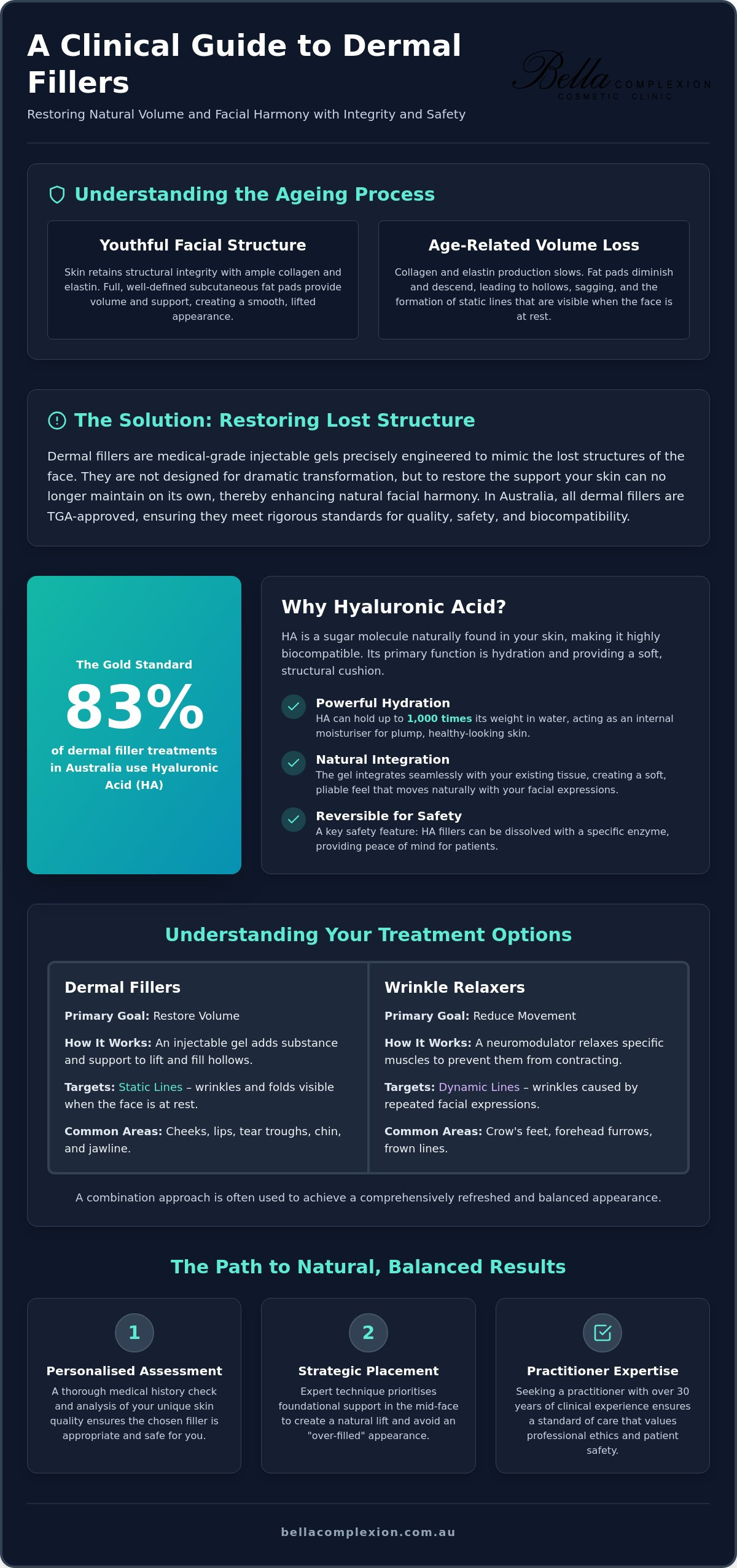
Understanding the ageing process is the first step toward achieving a natural result. As we age, our skin undergoes a biological shift; the production of collagen and elastin slows significantly, leading to a loss of structural integrity. Below the surface, the fat pads that once provided youthful volume begin to diminish and descend. An Injectable filler is a medical-grade gel designed to mimic these lost structures, providing the support your skin can no longer maintain on its own. These aren’t just cosmetic tools; they are precisely engineered substances used to restore facial harmony through clinical expertise.
In Australia, patient safety is paramount. Every product used in a clinical setting must be TGA-approved, ensuring it meets rigorous standards for quality and biocompatibility. Clinicians often distinguish between different viscosities based on the specific area of concern. For instance, a soft filler filler might be used to gently hydrate and smooth fine lines around the mouth or under the eyes. Conversely, a high-density filler filler is required when the goal is to lift the mid-face or redefine a receding chin line. This nuanced approach prevents the over-filled look that many patients understandably fear.
The Role of Hyaluronic Acid in Skin Health
Most modern dermal fillers are composed of hyaluronic acid (HA), a sugar molecule naturally found within your own skin. HA is remarkable because it can attract and hold up to 1000 times its weight in water, acting as a powerful internal moisturiser. When these gels are placed strategically, they integrate seamlessly with your existing tissue, creating a soft and pliable feel that moves naturally with your expressions. One of the most significant safety benefits of HA-based products is their reversible nature. If needed, the gel can be dissolved with a specific enzyme, providing an essential safety net that gives many first-time patients peace of mind.
Fillers vs. Wrinkle Consultations: Knowing the Difference
There is often confusion between volume restoration and treatments for expression lines. Wrinkle consultations typically focus on muscle-relaxing treatments that address the dynamic lines caused by movement, such as “crow’s feet” or forehead furrows. Dermal fillers, however, focus on static lines and hollows that remain visible even when the face is at rest. A combination approach is often the most effective way to achieve a balanced, refreshed appearance. While wrinkle consultations address the repetitive muscle movements that create lines, dermal fillers restore the structural foundations that prevent skin from sagging or hollowing.
Choosing Your Filler: HA, Biostimulators, and Regenerative Options
The field of aesthetic medicine has shifted from simply masking the signs of ageing to actively improving the biological function of the skin. This evolution is known as “regenerative aesthetics.” It moves beyond the idea of a quick fix, focusing instead on how we can encourage the body to repair itself. The choice of a specific filler filler is a clinical decision that depends entirely on your skin quality, age, and the specific anatomical layer we are addressing. What works for a patient seeking subtle lip hydration in their thirties is rarely the same solution required for someone in their sixties looking to restore deep structural support.
The clinical decision-making process involves assessing the “rheology” or the physical properties of the gel. We look at how the product resists deformation and how it integrates with your natural tissue. While we adhere to strict Australian standards, referencing the safety profiles of FDA-approved dermal fillers provides a global perspective on the rigorous testing these medical devices undergo. Our goal is always to choose a medium that ensures your results are as durable as they are natural.
Traditional Hyaluronic Acid (HA) Fillers
HA fillers remain the most versatile tool for immediate volume restoration. Because HA is a substance your body already recognises, these products are excellent for areas requiring precision and a soft finish. They are the preferred option for:
- Adding subtle definition and hydration to the lips.
- Smoothing the delicate skin of the tear troughs.
- Providing immediate lift to the cheeks and mid-face.
Results are visible the moment the treatment is complete. Depending on your metabolism and the area treated, these results typically last between 6 and 18 months before the body naturally breaks down the gel.
Biostimulators and Polynucleotides (Rejuran & Juvelook)
Modern biostimulators differ from a traditional filler filler by “organising” the skin to repair its own structure. Rejuran, which utilises polynucleotides derived from salmon DNA, is specifically designed for skin barrier repair and improving the texture of the under-eye area. It doesn’t just fill a line; it improves the health of the skin cells themselves. Similarly, Juvelook offers a hybrid approach. It combines the immediate hydrating benefits of HA with polylactic acid (PLA), which stimulates long-term collagen production. These regenerative options are ideal for patients who prioritising long-term skin quality over immediate volume. If you’re curious about which approach aligns with your goals, a personalised skin assessment is the most reliable way to create a tailored plan.
Strategic Placement for Natural Facial Harmony
Achieving a natural result requires an understanding of facial geometry rather than just an eye for wrinkles. We often look at the “Golden Ratio”, a mathematical proportion found in nature that our eyes perceive as balanced and attractive. Symmetry is often more vital than sheer volume. If we simply add volume without considering the overall architecture, the result can appear heavy or artificial. A common mistake is “chasing” a specific line, such as the nasolabial fold. If you inject a deep fold without supporting the mid-face first, the skin can look weighed down. This is where the choice of a specific filler filler becomes a clinical art; we use different densities to build a foundation before we address the surface.
Patients are often surprised to find that subtle enhancements require less product than they expected. When placement is strategic, we can achieve significant rejuvenation with minimal intervention. It isn’t about how much gel is used, but where it is placed to catch the light and support the skin’s natural movement—a concept of visual presentation also mastered by professional property marketing specialists UberRE. Our goal is always to ensure that your features remain uniquely yours, just refreshed and well-supported.
Mid-Face and Cheeks: The Anchor of the Face
The mid-face is the structural anchor of the entire face. As the fat pads in the cheeks diminish over time, the skin begins to drape forward, creating jowls and deepening the lines around the mouth. By restoring cheek volume, we can create a subtle, natural lift that often reduces the need for heavy treatment in the lower face. It’s a distinction between “contouring”, which creates a more sculpted, editorial look, and “restoration”, which focuses on replenishing what time has taken away. In a clinical plan, the mid-face is almost always the first area we address because it dictates how the rest of the face sits.
Lower Face: Lips, Chin, and Jawline Definition
Once the mid-face is supported, we can focus on the lower face to create a youthful “V-shape” profile. This involves defining the jawline and chin to provide a clear transition between the face and neck. For many, a small amount of filler filler in the chin can significantly improve the side profile and bring the nose into better proportion. When it comes to lips, our philosophy prioritises hydration and border definition over sheer size. We want to restore the natural “cupid’s bow” and address marionette lines or “smoker’s lines” with soft-tissue gels that move naturally when you speak or smile. This approach ensures the lower face looks balanced and revitalised without appearing overdone.
The Clinical Journey: What to Expect During Your Procedure
Your safety is the foundation of every treatment. Before any clinical intervention begins, we perform a comprehensive medical history check. This isn’t a mere formality; it’s a vital step to identify any contraindications, allergies, or previous surgical history that might influence your result. In Australia, dermal fillers are classified as Schedule 4 prescription-only medicines. This means every patient must have a consultation with a medical practitioner to ensure the treatment is clinically appropriate for them. This process establishes a baseline of trust and ensures that your filler filler treatment is conducted within a rigorous medical framework.
Comfort is a primary concern for many patients. To ensure a relaxed experience, we utilise high-strength topical anaesthetics before the procedure begins. Most modern, TGA-approved gels also contain lidocaine, a local anaesthetic that works during the injection process to further minimise sensation. While the thought of needles can cause anxiety, our methodical and gentle approach is designed to put you at ease. We prioritise your well-being as much as the aesthetic outcome, ensuring the environment remains calm and professional throughout.
Step 1: The In-Depth Consultation
A successful outcome begins with how we observe your face. We don’t just look at your features in a static mirror; we assess your face in motion. By observing how your muscles move when you smile, speak, or frown, we can ensure the placement of the filler filler integrates naturally with your expressions. This stage is about developing a long-term treatment plan. We move away from the “quick fix” mentality, focusing instead on a staged approach that respects your natural anatomy and provides longevity. This educational dialogue ensures you understand the “why” behind every recommendation.
Step 2: The Treatment and Immediate Aftercare
During the procedure, we may use either a fine needle for precision work or a micro-cannula for broader areas of volume restoration. Cannulas are often preferred for mid-face work as they typically reduce the risk of bruising and swelling. Once the treatment is complete, we provide immediate aftercare, which may include cooling the area to manage initial inflammation. You should expect some “social downtime,” as mild swelling or small bruises are common in the first 48 to 72 hours. We provide strict protocols to follow at home, such as avoiding strenuous exercise and heat for at least 24 hours.
A mandatory two-week follow-up is the final step in our clinical journey. This allows the product to fully settle and integrate with your tissues, giving us the opportunity to assess the final result and ensure facial symmetry is perfect. If you’re ready to discuss a professional plan for volume restoration, you can book your clinical consultation to begin your journey with a trusted professional.
Why Choose Bella Complexion for Dermal Fillers in Lake Macquarie?
Choosing a practitioner for your aesthetic journey is a decision that should be grounded in trust and clinical evidence. At Bella Complexion, Sue Willis (RN) brings over 30 years of clinical experience in the Newcastle and Lake Macquarie regions. This extensive background ensures that every filler filler procedure is approached with the same rigour as any other medical treatment. We operate as a boutique clinic in Toronto, offering a private, calm space where your care is deeply personalised. Unlike high-pressure retail environments, we act as your trusted clinical mentor, prioritising long-term skin health and ethical results over fleeting beauty trends.
Just as you would seek out specialised experts to explore Hernia Surgery for structural physical health, we believe aesthetic care should be handled with the same level of surgical precision and professional dedication.
Selecting the right filler filler for your specific needs requires a practitioner who understands the complexities of facial anatomy and the science of skin ageing. Our clinic is designed to be a safe haven for those seeking expert guidance without the stress of a fast-paced salon. We focus on the individual, ensuring that every consultation is thorough, educational, and focused on your unique goals. This methodical approach reinforces our commitment to quality and safety, giving you the knowledge you need to feel confident in your decisions.
Nurse-Led Authority in Toronto and Charlestown
Having a Registered Nurse perform your injectables is a significant safety advantage. Sue’s extensive medical background means she is highly skilled in complication management and adheres to the strict standards set by AHPRA. We serve our local communities from Belmont to Morisset with a consistent, evidence-based standard of care. Our commitment to ongoing education means we integrate the latest global aesthetic techniques into our local practice, ensuring you receive world-class care right here in Toronto. This clinical authority is balanced by a warm, approachable style that makes every patient feel heard and valued.
A Holistic Approach to Skin Rejuvenation
We believe that volume restoration is only one part of the rejuvenation journey. To ensure the longevity of your results, we often combine dermal fillers with other medical-grade treatments. For instance, integrating Venus Viva or PRP (Platelet-Rich Plasma) can improve the skin’s overall texture and resilience, providing a better canvas for structural support. We also recommend Synergie Skin medical-grade topicals to maintain the skin barrier and protect your investment at home. After your treatment, LED therapy is often utilised to speed up the natural recovery process and reduce any initial inflammation. This comprehensive methodology ensures that your results are not just immediate but sustainable. Book your clinical consultation at our Toronto clinic today to discuss a tailored plan for your skin.
Reclaiming Your Natural Vitality with Confidence
Restoring facial volume is more than a simple cosmetic procedure; it is a clinical art that prioritises your safety and long-term facial harmony. By understanding the biological process of ageing and the strategic placement required for a balanced profile, you can achieve results that feel authentic to you. Whether your treatment plan requires a traditional hyaluronic acid filler filler or a modern regenerative biostimulator, the key is a tailored approach that respects your unique anatomy and skin quality.
At Bella Complexion in Toronto NSW, we offer a professional safe haven for those seeking subtle, natural-looking rejuvenation. With over 30 years of clinical nursing experience, Sue Willis (RN) provides the expert guidance of a trusted mentor who values medical ethics over fleeting industry trends. You deserve a clinical environment where your health and aesthetic goals are equally prioritised. Book Your Personal Consultation with Nurse Sue Willis today to begin your journey toward restored vitality and quiet confidence. We look forward to helping you feel like the most refreshed version of yourself.
Frequently Asked Questions
How much does filler filler cost in the Newcastle area?
In Australia, the Therapeutic Goods Administration (TGA) prohibits the advertising of specific prices for prescription medicines, which include dermal fillers. Your investment depends entirely on the clinical assessment and the volume of product required to achieve your desired outcome. During your consultation, we provide a transparent breakdown of costs tailored to your specific treatment plan and the type of filler filler used.
Are dermal fillers painful?
Most patients describe the sensation as a mild discomfort rather than pain. We utilise high-strength topical anaesthetics before the procedure begins, and the gels themselves often contain lidocaine to ensure the process is as comfortable as possible. A gentle, methodical technique further reduces sensation, allowing you to remain relaxed throughout the clinical procedure.
How long do fillers actually last?
The longevity of your results typically ranges from 6 to 18 months. This variation depends on the specific area treated and your individual metabolism. Areas with high movement, such as the lips, may require maintenance sooner than more static areas like the cheeks or temples, where the product tends to settle and provide support for longer periods.
What is the difference between dermal fillers and biostimulators like Rejuran?
Traditional fillers provide immediate volume by physically taking up space under the skin to restore lost subcutaneous fat. Biostimulators like Rejuran work differently by “organising” the skin to repair its own structure and stimulate natural collagen production. While a filler filler restores lost support, biostimulators focus on improving skin texture, elasticity, and overall cellular health over several months.
Can fillers be dissolved if I don’t like the result?
Yes, hyaluronic acid fillers are completely reversible. If you aren’t satisfied with the result or if a medical adjustment is required, a specialised enzyme called hyaluronidase can be injected to safely dissolve the gel. This provides an essential safety net that ensures we can adjust or remove the product if your aesthetic goals or clinical needs change.
Is there any downtime after getting cheek or lip fillers?
You should expect some “social downtime” rather than a period of medical recovery. Swelling and potential bruising are common, particularly in the lips or cheeks, and usually peak within the first 48 hours. Most patients find that any visible marks can be easily managed and typically resolve within three to five days of the treatment.
How do I avoid the “overfilled” look?
Avoiding an unnatural look requires a deep understanding of facial harmony and a staged approach to volume restoration. We focus on supporting the mid-face architecture first rather than simply filling individual lines. By prioritising symmetry and using the minimum amount of product necessary to achieve lift, we ensure your results remain subtle and respect your natural anatomy.
Are fillers safe for all skin types?
Dermal fillers are generally safe for all skin types because hyaluronic acid is a sugar molecule that occurs naturally in human tissue. However, a thorough medical history check is mandatory before any treatment to identify underlying conditions or potential allergies. This clinical screening ensures that the treatment is appropriate for your specific health profile and skin requirements.